line
ᐃᓄᒃᑎᑐᑦ | Home | About | Tourism | History | Arts&Crafts | Wildlife | Business Services | Links
photo

Home

Rankin Inlet Community Profile

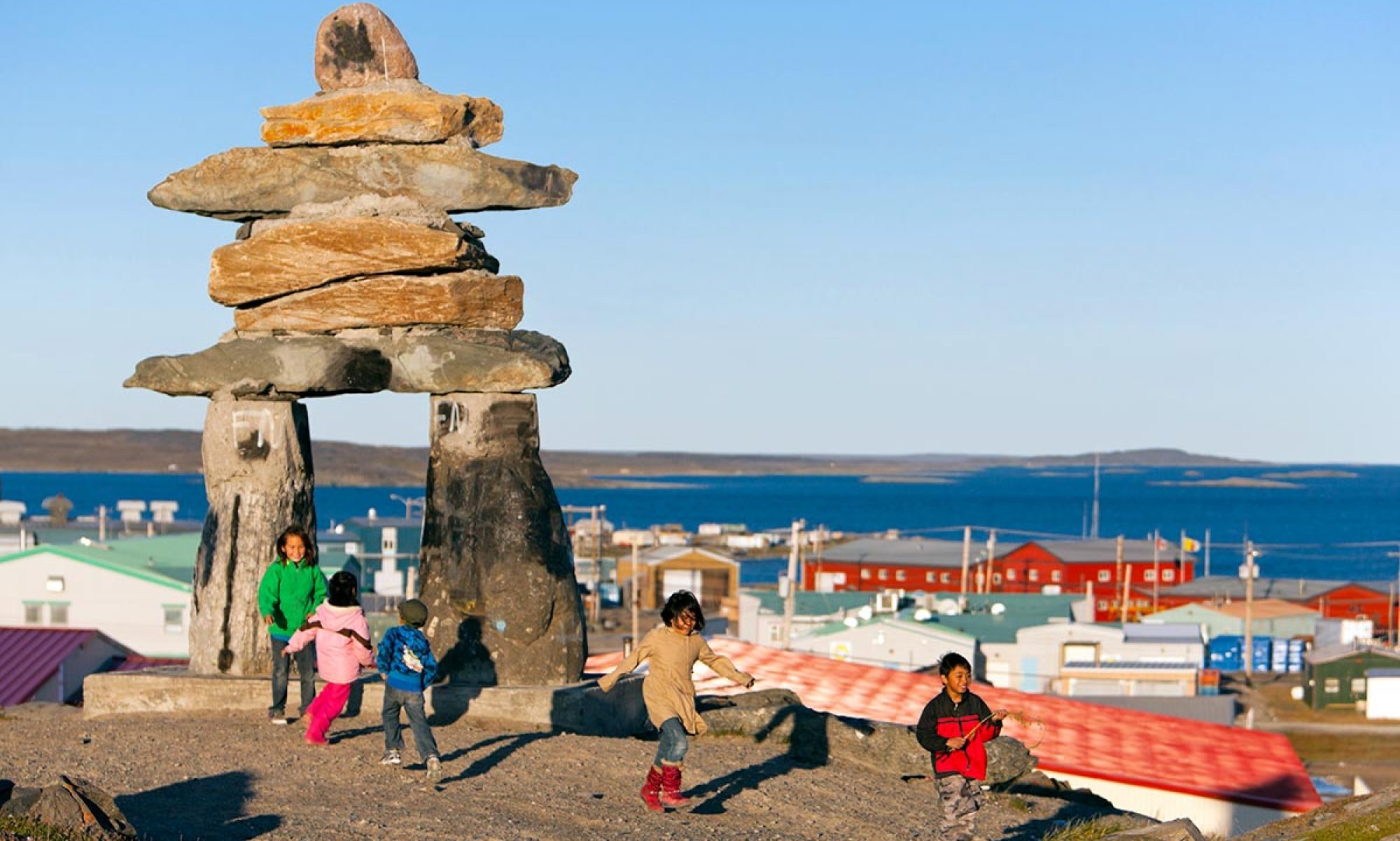
Rankin Inlet, or Kangiqtiniq (“deep bay/inlet” in Inuktitut), pop. 2358 (2006), is the newest and largest community in the Kivalliq Region. We are the business and transportation hub of the Kivalliq region and the gateway to Nunavut from Central and Western Canada. Due to the large volume of traffic through the area, as well as a history of regional government, mining and exploration, Rankin Inlet has developed a strong taskforce of entrepreneurs. Freight expediters, equipment suppliers and outfitters can provide tourists and companies interested in doing business in the area with a wide variety of services.

The Ijiraliq (Meliadine) River Territorial Historic Park is a favorite spot for hiking, fishing and bird watching. Archaeological sites, such as the European whaler shipwreck near Marble Island and the Thule site in the Ijiraliq River area provide glimpses into a remarkable past. Come take a Walking Tour through the community and you will see where north meets south, and a fascinating blend of 2 very different ways of life. You will find where an ancient past borders on a vibrant present. You can see caribou skins & arctic char drying on racks, outside of homes in the fresh Arctic Air.

The community is also equipped with various recreational facilities to keep you active, such as a fitness center, hockey arena, curling arena, baseball diamond, recreational volleyball, basketball, soccer, badminton and hockey, an outdoor beach volleyball court and soccer field, a swimming pool, an eighteen hole golf course, and playgrounds throughout the community. There are a variety of events to keep you occupied throughout the year such as, arts and crafts shows, square dances, bingo, Pakalluk Time (town festival), Avataq Hockey Tournament, Christmas activities and many more.

History

The mouth of the Melladine River is the only nearby area that shows intensive use by historic Inuit. The Thule people came to the area to fish, building stone weirs to channel the arctic char into shallow water where they could be speared. They hunted caribou and seals in the area, and trapped waterfowl.

First visited by Europeans in the early 1600’s the Inlet was named for Lt. John Rankin of the British Royal Navy.

In 1721, Captain James Knight and his crew were marooned on Marble Island, about 32 km from Rankin Inlet. Knight was exploring, searching for valuable minerals and the Northwest Passage. His two ships were wrecked in the shallows, and he and his crew of 50 were stranded on the island.

During the Korean War, the price of nickel rose sharply, and the North Rankin Nickel Mine was opened. The mine operated from 1957 to 1962 when a combination of declining prices and depletion of the ore body forced closure of the mine. Many Inuit came in off the land to work in the mine during those years, and some moved on to work in mines in Yellowknife, Flin Flon and elsewhere. The population of Rankin Inlet dwindled to about 320 in 1964.

Federal work projects were established in Rankin Inlet in the mid-1960’s. This included a ceramics project, where local Inuit were taught how to create a ”Northern” style of ceramics which included images of local wildlife. These artifacts were later sold to southern Art Galleries. A soapstone carving project was also undertaken at the same time. Many local artists were able to establish themselves in the Art World. Some famous local carvers are Pierre Karlik, Joachim Kavik, Patrick Kabluitok, Edward Kabluitok, and Simeonie Hakuluk – their work can be purchased locally.

In the early 1970’s, the Government of Northwest Territories moved its regional headquarters to Rankin Inlet, and the community began to grow. An independent spirit of entrepreneurship development, and today a multitude of small businesses flourish. Most are partially or completely Inuit-owned.

On April 1st, 1999 the Government of Nunavut was formed and separated from the Northwest Territories. The boundaries were set in 1993 via the Nunavut Act and Nunavut Land Claims Agreement Act. This was an outstanding accomplishment for the people of Nunavut. It made Nunavut Canada’s newest and largest territory and the fourth largest country sub-division in the world.

While mining used to be the main industry, it is still a prospect for Rankin Inlet. The Meliadine West gold project, located 16km outside of town is one of the largest undeveloped gold deposits in Canada. Started by WMC International Ltd., it is a mature exploration project now owned by Cumberland Resources and Comaplex Minerals. Exploration continues and there is hope that it may be developed into a mine. In addition, there is very active exploration for diamond bearing deposits being carried out north of Rankin.

Getting here

Flights to Rankin Inlet are operated by First Air and Canadian North on Mondays, Wednesdays and Fridays. It is possible to reach Rankin Inlet in one day from either Ottawa/Montreal--via Iqaluit, or Edmonton/Calgary--via Yellowknife. Kivalliq Air operates flights every day of the week except Saturday from Winnipeg to Rankin Inlet, with a stop in Churchill; Calm Air flies to Rankin Inlet from Monday to Saturday, with stops in Churchill and Arviat. First Air flies directly from Winnipeg to Rankin Inlet on Sunday, Tuesday and Thursday.

The Pride of Rankin Inlet

Jordin John Kudluk Tootoo (ᔪᐊᑕᓐ ᑐᑐ; born February 2, 1983) is a Canadian professional ice hockey player with the Nashville Predators of the National Hockey League (NHL). His middle name Kudluk (kalluk in standard Roman spelling) means "thunder".
His mother, Rose Tootoo, is of Ukrainian descent, while his father, Barney, is an Inuk from Nunavut. He is also the nephew of Manitoba Legislative Assembly Speaker George Hickes and cousin to Nunavut MLA Hunter Tootoo.
Although born in Manitoba, Tootoo grew up in Rankin Inlet, where he was taught to skate and play hockey by his father, Barney. Growing up in Rankin Inlet also allowed Tootoo to learn the traditional Inuit lifestyle that includes hunting and camping.
As the first Inuk to play in the National Hockey League he has become a role model for youth in Nunavut.

admin login